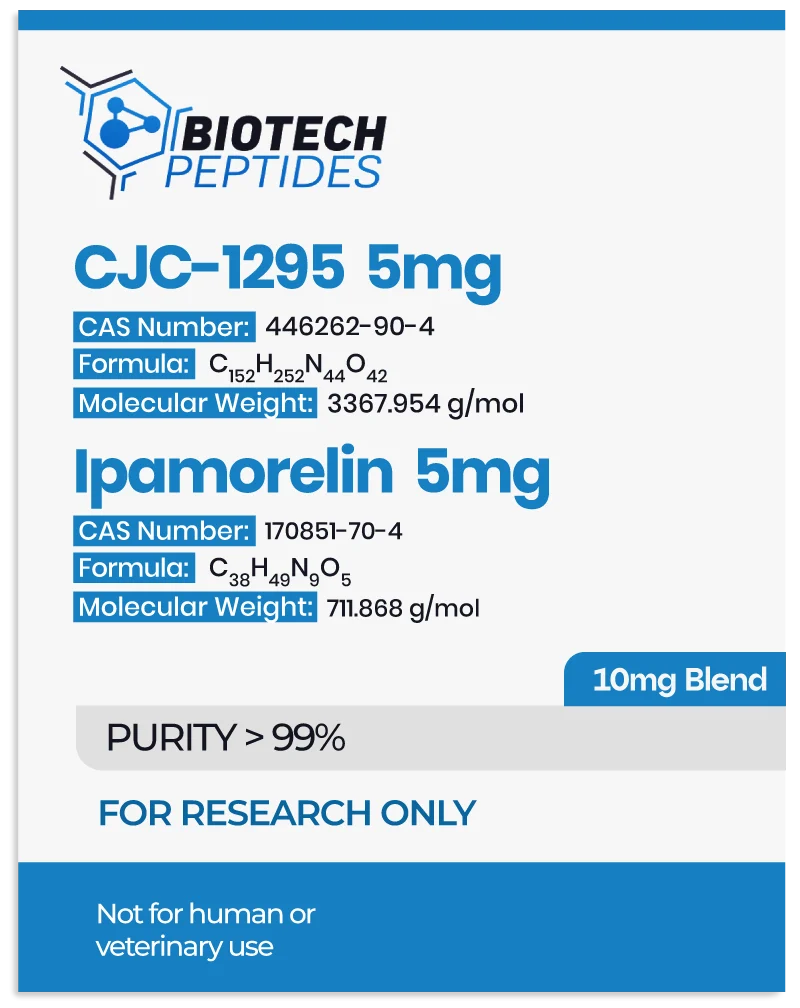
Subcutaneous injection sites: Primary : Abdominal fat (2 inches from navel) Secondary : Upper thigh Rotation : Change sites daily to prevent tissue irritation Injection technique: Clean injection site with alcohol Pinch skin to create fold Insert needle at 45-degree angle Inject slowly and steadily Remove needle and apply gentle pressure Storage and Handling Proper storage ensures your Ipamorelin maintains potency throughout your cycle: Reconstituted peptide storage: Temperature : 36-46F (2-8C) refrigerated Duration : Use within 30 days Protection : Keep away from light and heat Handling : Minimize agitation and temperature fluctuations Lyophilized powder storage: Temperature : Room temperature or refrigerated Duration : 2+ years when properly stored Protection : Keep sealed and dry Understanding proper CJC-1295 and Ipamorelin planning and sourcing ensures you maintain peptide integrity throughout your protocol
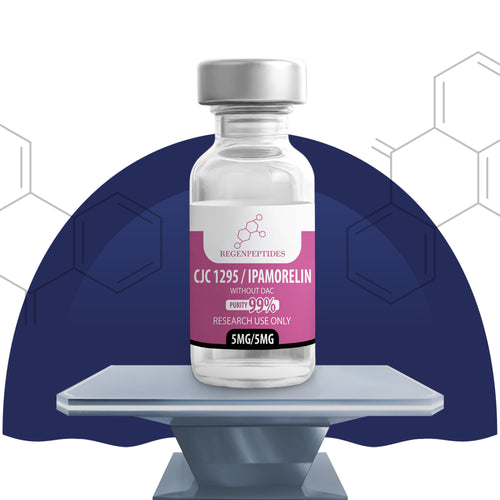
Ipamorelin + MK-677 Extends GH and IGF-1 elevation through combined short- and long-acting ghrelin receptor activation
How It Works This synergistic stack combines two clinically studied peptides that stimulate your bodys growth hormone (GH) production naturally: Tesamorelin activates the growth hormone-releasing hormone (GHRH) pathway, signaling the pituitary gland to increase GH secretion
Liposomale inkapseling beschermt het glutathion tegen die afbraak, waardoor meer van het molecuul intact de darmwand kan bereiken
Growth Hormone Signaling Support chat 24/7 Customer Support labs Lab tested for purity & quality local_shipping Ships from Canada within 24 hours Free shipping on orders $300 & up Automatically applied at checkout Canada's only domestic premium peptide manufacturer Polar Peptides is Canada's only domestic manufacturer and supplier of premium research peptides, with production and fulfillment handled in Canada
CACNA1A is regulated by IGF2BP3 to inhibit ferroptosis in ovarian cancer CACNA1A, the gene encoding voltage-gated calcium channels (VGCCs) [19], has been studied extensively in neurological disorders, and new evidence has recently pointed to a critical role of CACNA1A in cancer [20, 21]